
Good Construction Quality
What is good quality construction?
What is good service?
How do I know I have a great builder?
These questions come up all the time, and for good reason. Too often I've watched clients go through a painful build because they hired a builder or trades with little or no experience, or a builder who bid the job low and then added extra charges during construction.
The lowest bid is rarely the cheapest
A couple of years ago, we designed a garden suite for a client who asked what I expected construction to cost. I told him to plan on at least $350 per square foot. (To the critics who say you can't price a home by the square foot: I agree. I only use these numbers to get a general sense of a client's budget.)
He said that was far too high and that he'd shop around. A few days later he came back, pleased to say he'd found a builder who could do it for about $200 per square foot. I warned him that if he gave the job to that builder, it probably wouldn't end well. I later heard he hired them anyway.
The problems started early. The excavation company only showed up a couple of days a week, and sometimes didn't come at all for more than a week. The final excavation invoice was ten times the original quote, which had been written on a napkin. The whole build took three times longer than it should have. In the end, he paid more than $350 per square foot, plus all the headaches.
Giving your project to the lowest bidder often leads to trouble, especially when that bid is more than 20% below everyone else's. Paying more up front often means paying less in the end.
Experience matters on site
About two years ago, we designed a four-unit townhouse. With framing well underway, our client met with me and asked why the two middle units were about six inches out of line with the others. When we looked into it, we found that the foundation contractor had moved a couple of steel columns more than six inches. He assumed the plans were wrong and never checked with the designer first.
On that same build, and a few other builds, I also noticed a lot of poor framing. Here are a few examples:
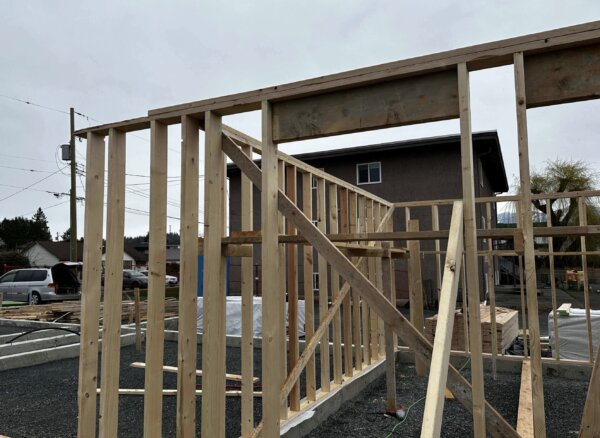
Misaligned Headers
In this photo, the headers over the doors and windows were set flush with the inside face of the wall. That leaves a small gap between the header and the exterior sheathing, and once the sheathing is on, there's no way to get insulation into that gap.
A builder could insulate the gap before the sheathing goes on. But the insulation would then sit exposed through the rest of construction, and here on the West Coast (we do live in a rainforest 🙂), it's likely to get wet. Wet insulation trapped in a wall can lead to mildew and mould.
When the headers are set flush with the exterior face instead, the gap ends up on the inside of the wall. The framing can then dry out once it's finished and the roof is on, and the gap gets insulated from the inside along with the rest of the walls.
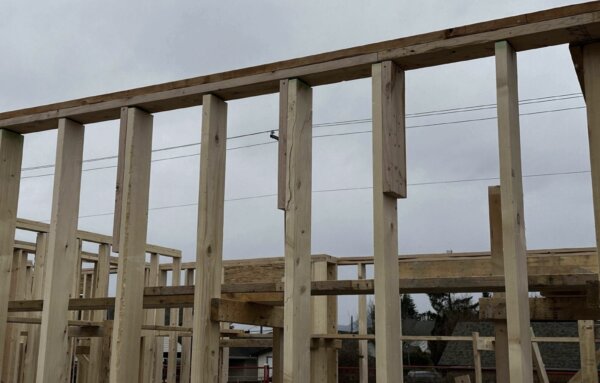
Unlevel foundation wall
The foundation contractor didn't get the top of the foundation wall level, so the wall framed on top of it wasn't level either. As you can see in the photo below, the framer tried to fix this by adding 2x6 blocking beside each stud to bring the top of the wall to level.
That creates a new problem. Once the weight of the next floor, the walls and the roof is bearing on this wall, the blocking won't be able to carry the full load, and the upper floor will settle. As it settles, the drywall inside will crack, which means a mess and some very unhappy homeowners.
The foundation contractor should have levelled the top of the foundation wall properly. Failing that, the framer should have cut full-length studs to fit so the top of the wall came out level. A mistake at the foundation will cause problems through the rest of the build.
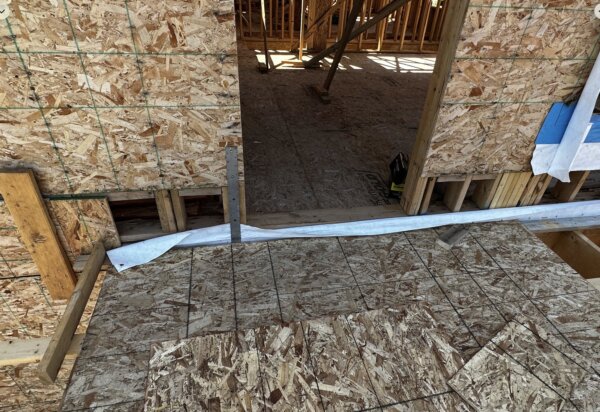
Deck waterproofing
To keep water out of the home, a deck should be stepped down at least 140 mm (5 7/8") from the interior floor. The deck in this photo is only about 1–2 inches below the floor.
There are ways to work around this, such as adding plates under the door to raise it. But that means stepping over a sill about 3 inches high, which creates a tripping hazard every time someone walks out onto the deck. It's much better to get the step-down right from the start.
Unapproved changes during construction
On this project, the builder decided partway through construction to reduce the depth of this motel without checking with the designer or engineer first. He also didn't tell the truss supplier about the change. As you can see, the trusses now extend about 12 inches past the beam that's supposed to support them.
This can be fixed by having the truss manufacturer design extra bracing above the beam. But the structural engineer doesn't always inspect the trusses, so a problem like this can easily be missed. That's even more likely in municipalities where the building inspector doesn't inspect the building.
If you're building a new home, talk to your designer before you make any change. What looks like a small change to you could have a big impact under the Building Code or local bylaws.
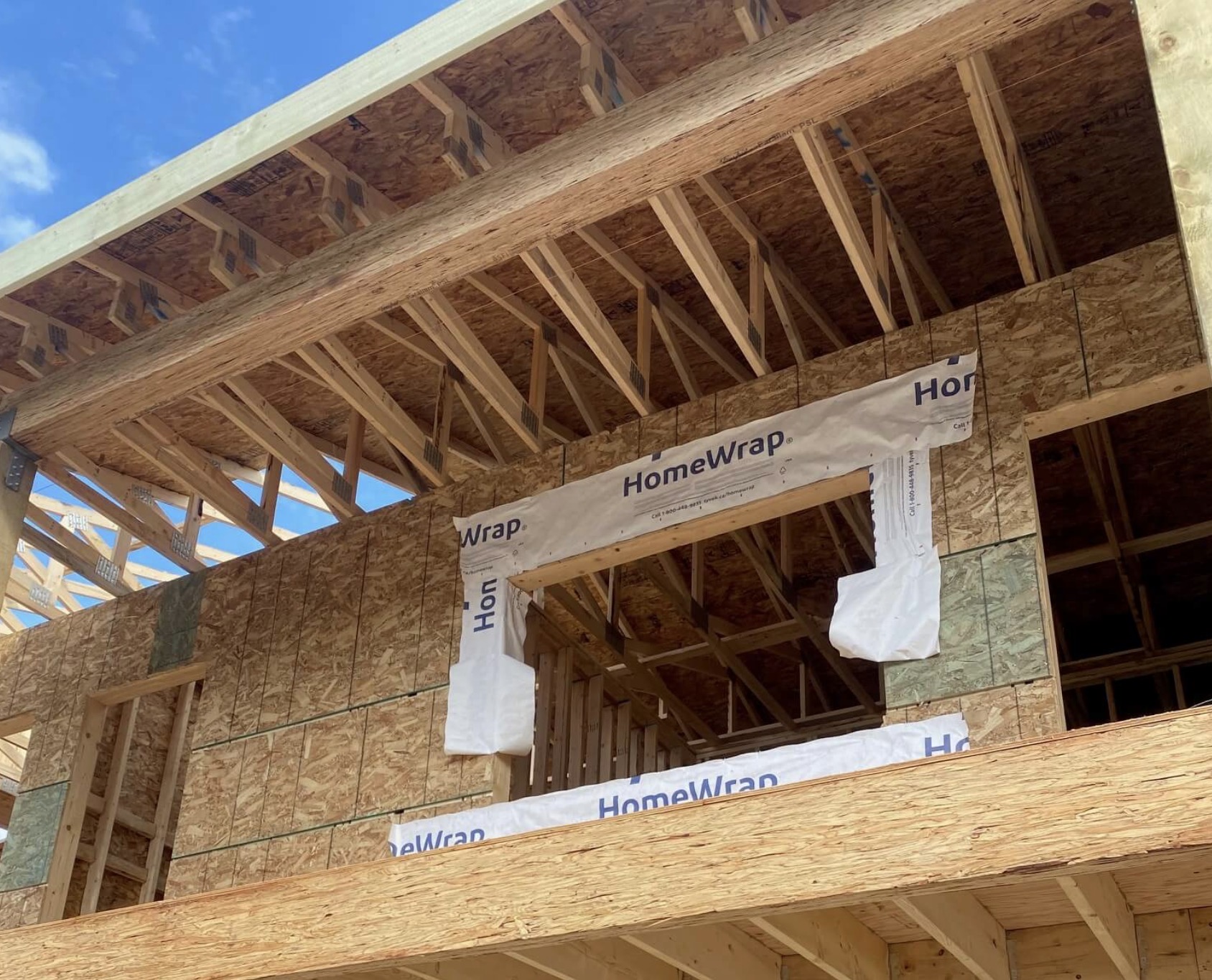
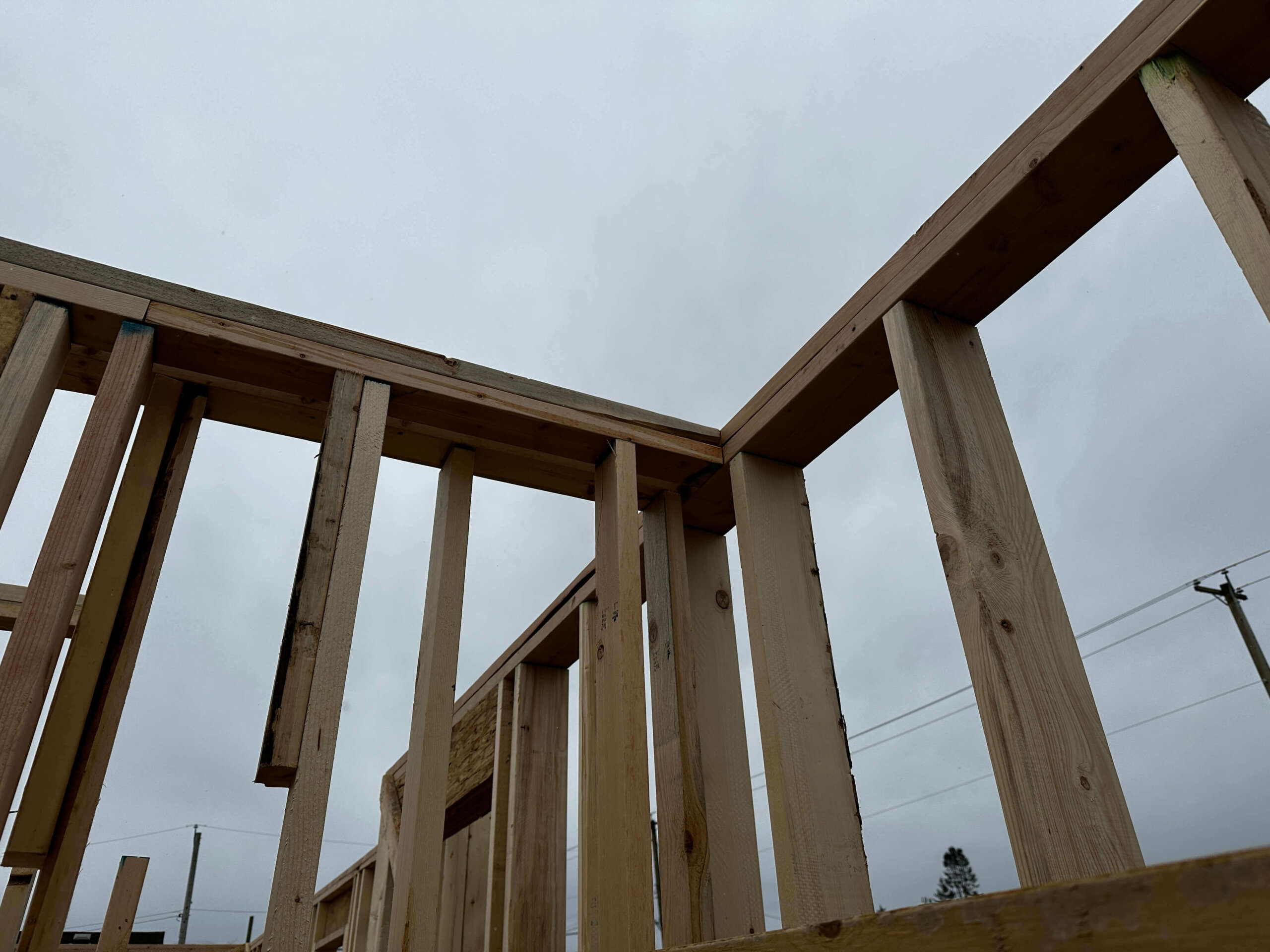
Lapping top plates
Every wall is built with two plates on top, known as a double top plate. One of its main jobs is to tie the walls together so the house acts as one strong structure. To do that, the upper plate needs to lap over onto the wall that meets it.
In this photo, the upper plate stops short and doesn't extend over the perpendicular wall. Framing it this way is faster, but it leaves a weaker connection where the walls meet. It isn't the standard of a quality build.
How to choose a good builder
It can be hard to tell whether the builder you've picked does quality work. Often the quality, good or bad, comes from the trades and subtrades rather than the builder. A builder with weak skills of his own can still deliver a good home if his trades do good work. So the real question is: will your builder make sure his trades and subtrades do great work? A builder who won't insist that his trades fix their mistakes isn't a good builder.
Do your research before you choose a builder, but know that research can be misleading. The Better Business Bureau (BBB), for example, won't tell you much. A builder with few or no complaints on the BBB isn't necessarily a good builder. It just means nobody has filed a complaint. And a builder with no positive reviews there isn't necessarily a bad one.
Here are the best ways I know to check out a builder, trade or subtrade:
- Talk to past clients. Ask the builder if you can speak with some of the people he's built homes for, and visit their homes. He may need to get their permission first, but this is a good place to start. If he doesn't want you talking to past clients, he may be hiding something.
- Ask at the local lumber yard. Find out where the builder buys most of his materials. Lumber yards often know the local builders very well.
- Contact the professionals he's worked with. Structural engineers, designers and other consultants who have worked with the builder can tell you a lot.
- Ask your designer. Your local designer may have useful insight on the builders in your area.
- Visit one of his current job sites today. If the builder has a project under construction, ask to see it the same day, ideally at the end of the workday. Don't give him time to clean up first. You want to see the site as it really is. A good builder makes sure the site is tidied up at the end of every day, so if it's messy and disorganized, you may want to keep looking. While you're there, look for the problems I've shown above. These are Framing 101. If a builder can't get these right, stay away.
A builder telling you he's a Red Seal carpenter doesn't mean much to me on its own. I've seen framers who started right out of high school give better service and quality than builders who have been in business for 20 years. Pay more attention to a builder's attitude and values than to what he says about himself.
I hope this helps you choose the right builder or general contractor for your project. Remember not to look only at the price. Paying more often costs you less.
Happy building!